Move
No one told me to exercise hard. I worked it out myself
Thousands now wait over a year to see a neurologist. What I learned living with Parkinson's in the gap, including the exercise no one mentioned.
More than 2,100 people with an urgent referral to a neurologist have now waited over a year to be seen. That figure, published this month by the Neurological Alliance, isn't an abstraction, behind it are thousands of people getting on with life, day after day, before anyone with the right training has had the chance to look at them.
If you're one of them, or you're waiting on a follow-up that keeps slipping, this is for you.
What the new figures say
The Neurological Alliance, with 36 member organisations, has written an open letter to government. Their analysis found more than 2,100 people with urgent neurology referrals waited longer than a year for an appointment. One in six people in England live with a neurological condition, and together those conditions cost the UK an estimated £96 billion a year.
Georgina Carr, the Alliance's chief executive, said people are waiting months, and "sometimes more than a year, for assessment, diagnosis and treatment."
Neurology has been called the NHS's Cinderella service for decades. The Alliance is asking government for three things: a national plan for neurological conditions, an urgent look at whether there are enough specialists to meet demand, and a regular count of that workforce so the shortfall can be planned for rather than stumbled upon. We think they're right, and we'll gladly add our name to that call.
Why the wait is the hard part
A diagnosis is one day. What follows it is every other day.
When you're waiting for a first appointment, or the next one, you're not sitting in a waiting room. You're at home, working out for yourself how to move when your body feels unfamiliar, what to eat, why the afternoons feel heavier, how to explain any of it to the people around you. Much of that never fits inside a fifteen minute appointment anyway, even once you get one.
That's the part the headlines miss. The clinic matters enormously, you need the assessment, the diagnosis, the medication review, and none of it is optional. But the clinic was never going to be there for the ordinary Tuesday. The days in between have always been yours to hold, and a year is a long time to hold them alone.
The system has to change, and that takes time
A workforce plan and a service framework are exactly what's needed, and we hope the government acts on the letter. But even at their fastest, changes like that arrive over years, not weeks. Nobody waiting today can put their life on pause until the staffing catches up.
So there are really two questions here. One is for government: build the capacity. The other is quieter and closer to home: what do you do with the days while you wait?
What you can do while you wait
A few things are worth knowing, none of them a substitute for the appointment you're owed.
Keep moving, in whatever small way fits the day. Parkinson's UK is clear that staying physically active can help you manage some symptoms, and that little and often beats the occasional big effort. It doesn't need to be a gym; it needs to be regular.
Write things down as you notice them. The afternoon dip, the handwriting, the broken nights a short running note is far more useful to a specialist than trying to remember it all in the room, and it makes a long-awaited appointment count for more.
Leave medication to the professionals. Timing, doses and changes belong to your GP, Parkinson's nurse or consultant , never adjust them on your own, however long the wait.
And try not to go quiet. Waiting is isolating, and staying connected to people is part of staying well, not a luxury on top of it.
What helps on the days in between
This is why we built Day2.
Day2 isn't a neurologist and doesn't pretend to be. It won't diagnose you, and anything to do with medication stays with your clinical team. What it does is take the daily part, the part that was always going to fall to you, and make it less of a guess and less lonely.
You answer a few questions about how things are for you, and Day2 builds a plan around your answers: movement matched to how you're actually moving that morning, food that works around your day, ways to wind down and sleep, and nudges to stay connected rather than closed off. It's made to be opened for a few minutes on a good day and forgiven on a bad one. Little and often, no guilt.
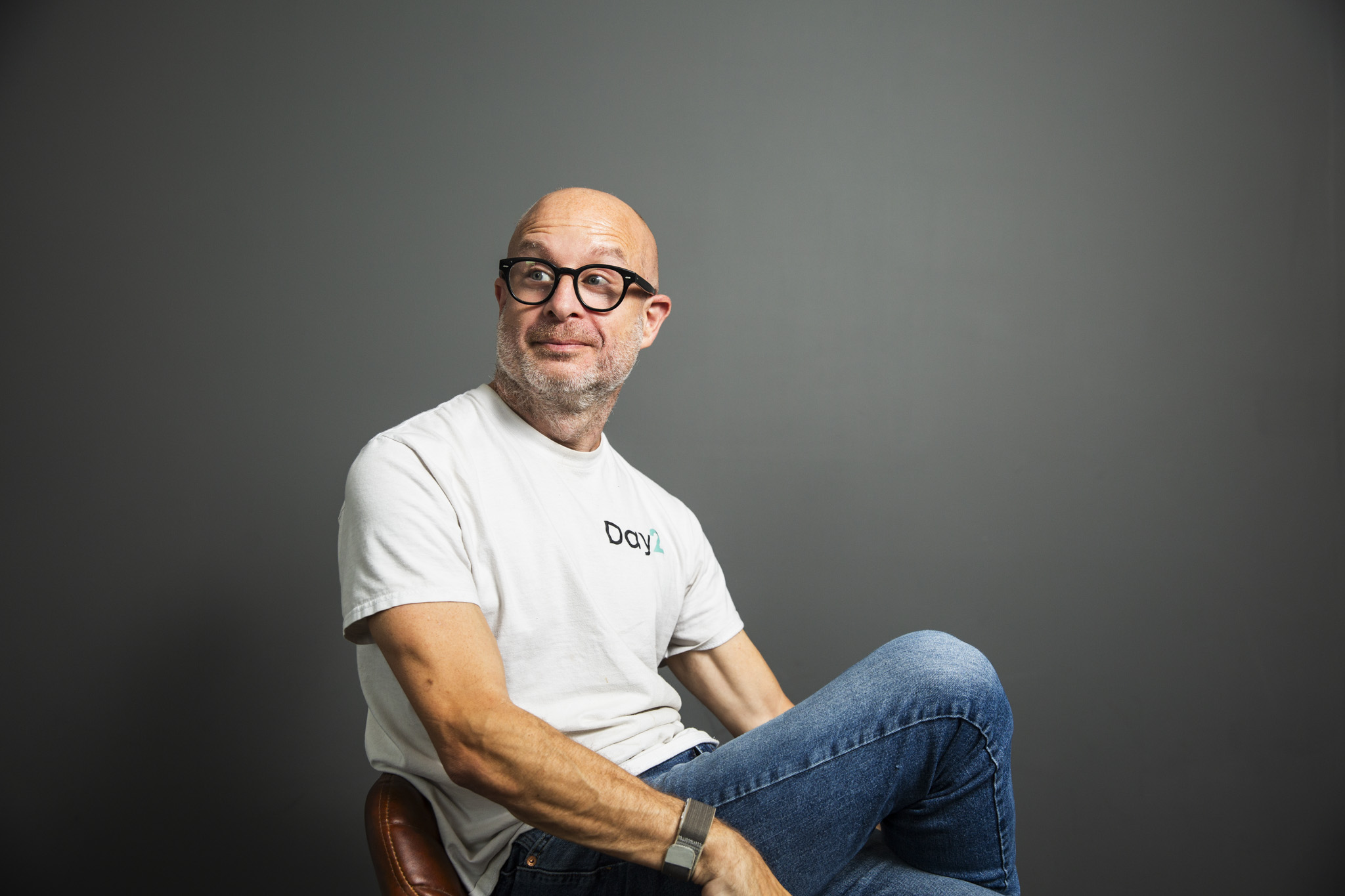
It's built by people who live this. I was diagnosed with Parkinson's in 2016; my co-founder Ed has spent more than 15 years training people with neurological conditions. We're not guessing at what the days in between are like.
I know this wait from the inside. It took me over a year to be diagnosed in the US, and when I came back to the UK I waited another 18 months for my first neurological appointment. And despite the mounting evidence for it, no one ever told me to exercise hard, I just had to figure that out for myself.
The evidence has since caught up with that. The strongest case for training hard is in people diagnosed early: in one trial, those with newly diagnosed Parkinson's who exercised at high intensity, around 80 to 85% of their maximum heart rate, held their symptoms steady over six months, while those doing less lost ground. How hard to go depends on where you are and how you're doing more than on your age: earlier on, and if you're otherwise well, you can often train harder; later, or if balance is a worry, gentler and better supported is wiser. It's worth raising intensity with your clinical team rather than pushing alone, as I did.
We can't shorten a waiting list, we wish we could. But if a year of ordinary days stands between you and being seen, our hope is that you don't face them with nothing, and that when your appointment finally comes, you arrive having kept moving rather than having waited in place.
Day2 is free while we're in early access, You can find instructions on this website. And if you want to push for the bigger fix, the Neurological Alliance's letter is worth two minutes of your time.
- Neurological Alliance — New analysis exposes year-long waits; alliance urges government action on neuro workforce
- Parkinson's UK — Physical activity and exercise
- SPARX trial — high-intensity exercise and early Parkinson's (University of Colorado Anschutz; Schenkman et al., JAMA Neurology, 2018)
- The role of exercise intensity in Parkinson's — personalised prescription (Frontiers in Aging Neuroscience, 2026)
This article is general information, not medical advice, and it does not replace your GP, Parkinson's nurse or consultant. Day2 never advises on medication, doses or timing.