movement
Parkinson's plays a long game. So can you.
It never announces itself, and it never sends a receipt. Getting ahead of it means investing in something you'll never get to see.
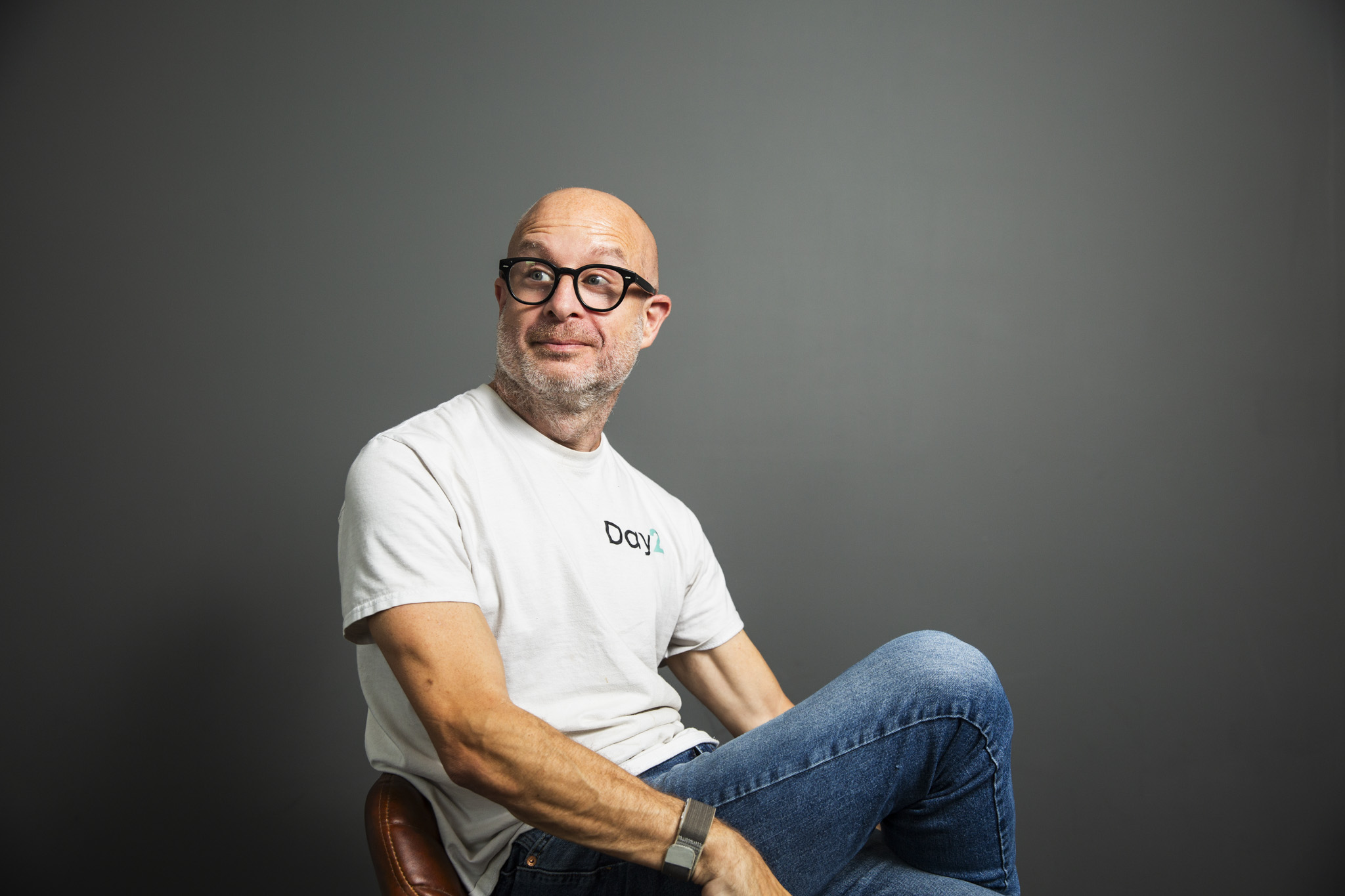
Parkinson's is patient. That's the thing about it that took me longest to understand, and it's the single most useful thing I know.
It doesn't arrive. It accrues. It takes a little ground at a time, quietly, in places you weren't looking, and presents you the bill months later as though the whole thing happened overnight.
So if you want to get ahead of it, you have to play the same game it does. Small moves, made early, made constantly, banked long before anyone asks you for them.
Its game is that it never announces itself
Think about thirst. Parkinson's UK put it plainly: by the time you feel thirsty, you're already dehydrated. Thirst isn't a warning. It's a receipt.
Nearly everything works that way. Balance doesn't hurt. Core strength doesn't send a notification when it's slipping. Nobody tells you your stride is shortening. You find out when someone says you're hard to keep up with, or you put a hand on the wall going upstairs and realise you've been doing it for a while.
By then you're not getting ahead of anything. You're settling up.
Which is why reacting is a losing position
If your whole strategy is to respond to symptoms as they appear, you've agreed to always be behind. Every move you make is a move it made first, and you're chasing ground you've already given away.
Some of that ground is genuinely harder to win back. Parkinson's UK's advice on posture is blunt about it: rigidity pulls you into a lean or a stoop, and over time muscles and joints settle into those positions and become harder to shift. Not impossible. Harder. The work is cheaper before the settling.
That's the argument for doing balance work while your balance is fine, and building core strength before anything requires it of you. Not because you're unwell today. Because you're banking it.
The numbers are better than people expect
I'm not going to pretend you can out-argue Parkinson's. Nobody exercises their way out of a diagnosis.
But you can stop conceding ground for free, and the evidence that it counts is real. The Cochrane review of falls interventions, covering 32 trials and more than 3,000 people, found exercise probably reduces the rate of falls by around 26% in people with mild to moderate Parkinson's. Careful, hedged language, deliberately so.
Step outside Parkinson's and the numbers get bigger. Age UK's guide to falls prevention exercise reports that a properly tailored programme can cut falls by as much as 54%, on the back of a nine-month group programme trialled in older people who were already falling often. A home-based programme in New Zealand managed around 35% over a year. Those trials weren't in people with Parkinson's, so read them as the shape of the thing rather than a promise about your own odds.
The detail I keep returning to in the Cochrane review isn't the percentage. It's who was in the trials: people with mild to moderate Parkinson's. Most of what we know about exercise reducing falls was learned from people who weren't yet in trouble. The evidence for getting ahead of it came from people who were ahead of it.
It took me three years to feel it
It is very hard to invest in something when you never get to see the return.
Age UK is unambiguous about what those results cost. The exercise has to be strength and balance work, done standing, made progressively harder, two or three times a week, for a minimum of around 50 hours, which in practice means six months or more. They compare a half-course to half a course of antibiotics: not a partial result, just a waste. Chair-based exercise alone doesn't get there.
So the deal on the table is fifty hours of unglamorous work before the number means anything. And the payoff, when it comes, is a fall that doesn't happen.
You can't see that. You can't feel it. Nothing pings. There is no moment where you get to stand there and think: right, that one. That's the one I just avoided. The whole reward is an absence, and absences make terrible motivation.
Which is exactly how Parkinson's wins by default. It doesn't need you to give up. It just needs you to find the returns insufficiently interesting for a few months at a time.
My wife used to joke that I had no core, and that I only went to the gym for the sauna. She wasn't wrong about either. So when I was diagnosed and exercise came up, core was the first thing I knew I'd have to face, and I started doing the work. It was three years before I could honestly say I felt the benefit. Three years. And the thing I understand now that I didn't then is that it was working the whole time. I just couldn't feel it, because you never can.
Watching the World Cup this summer, I kept coming back to Japan. They set out a hundred-year vision for their football in 1992, and in 2005 their federation committed to winning the World Cup by 2050. Whoever wrote that down knew they wouldn't be the one lifting it. They were doing the work for people three generations away from feeling any of it. I find that steadying rather than depressing. My horizon is far shorter than theirs, and the person who collects is me.
Which is why you have to get paid in something else in the meantime. Not in how today felt, because today is a liar and it lies in both directions. In the count of sessions done. In a line you can look back along over six months, instead of trying to remember whether last spring was better or worse than this one. Those are proxies, and they're meant to be. You need proxies, because the real return is invisible by design.
It isn't a match you win, it's one you keep playing
There's no final whistle, and I'd rather say that than sell you something.
What there is, is a long series of small positions. Parkinson's takes them slowly. You can take them back the same way. Parkinson's UK suggests 2.5 hours a week as the level worth aiming at, and notes plainly that most people aren't getting there.
Being consistently, slightly ahead, for years, is the whole of it.
What Day2 is for
Day2 exists because staying ahead of something invisible is hard to do alone and impossible to do from memory.
It's built to make the small stuff routine rather than heroic, and to give you something to look at while the real returns stay out of sight: movement you can do today, tracked daily, so that six months from now there's a line instead of a guess. That's it. It's the in-between-appointments part, which is nearly all of it.
Start before you need to. It's the only real advantage on offer, and it's available today.
- Why is it important to stay hydrated with Parkinson's? — Parkinson's UK
- Sitting posture and Parkinson's — Parkinson's UK
- Interventions for preventing falls in Parkinson's disease — Cochrane, 2022
- Falls Prevention Exercise – following the evidence — Age UK, 2013
- Exercise framework for professionals — Parkinson's UK
This article is general information, not medical advice, and it does not replace your GP, Parkinson's nurse or consultant. Day2 never advises on medication, doses or timing.